


The most striking pattern in the storm cloud gathering over higher education since I last scanned the skies is a shift from prioritizing attacks on shared governance (the Texas SB 37 model) to direct attacks on tenure and academic programs. The goal here is clear: by converting what is a political judgment about the value of disciplines and faculty into an apparently neutral financial calculation, it becomes harder to galvanize political opposition. More importantly, such legislation is considerably harder to reverse. The assault on shared governance continues (see Alabama and Tennessee below), but the financial-engineering strand is the newer and in some ways more durable innovation.
Updates from April
Louisiana
HB 1063, the "Higher Education Accountability and Governance Act" is dead for the cycle, having never made it out of the House Education Committee. The provisions it contained may migrate to 2027, but the bill would have to wait for the next full regular session.
The state also begins compliance with a 2024 law requiring all state university classrooms to display a copy of the Ten Commandments. The law had been tied up in appeals since its passage. A trial court judge had blocked the law in November 2024, and a three-judge 5th Circuit panel upheld that ruling in October 2025, with the panel calling the law "plainly unconstitutional." However, the full 5th Circuit subsequently voted to hear the case en banc, and on February 20, 2026, in an 11-7 vote, they overturned the lower court's ruling and lifted the injunction. The case may ultimately end up with the Supreme Court, but there is little reason to think that the Roberts' court will overturn the 5th Circuit's ruling. Arkansas and Texas passed their own Ten Commandments display laws in 2025, prompting litigation and rulings blocking those laws, so Louisiana's is, for now, the only one actually in effect.
Alabama
HB 580 was signed into law, taking effect October 1, 2026. As discussed in the April update, the law requires that any approved faculty senate include 50% presidential appointments, with faculty senate leadership also appointed by the university president as well. All members can be removed at the discretion of the president, and the senate's only authorized function is to provide confidential recommendations to the administration.
HB 580 also provides for board authority over the curriculum, something we have seen elsewhere, including here in Ohio.
HB 580 might be most striking in its provisions regarding faculty discipline and termination, processes that have historically included faculty. Under HB 580, the grounds for dismissal of tenured faculty are made exceptionally broad, including "good cause as defined in the institution's policies," and due process is reduced to a hearing before a designated administrator.
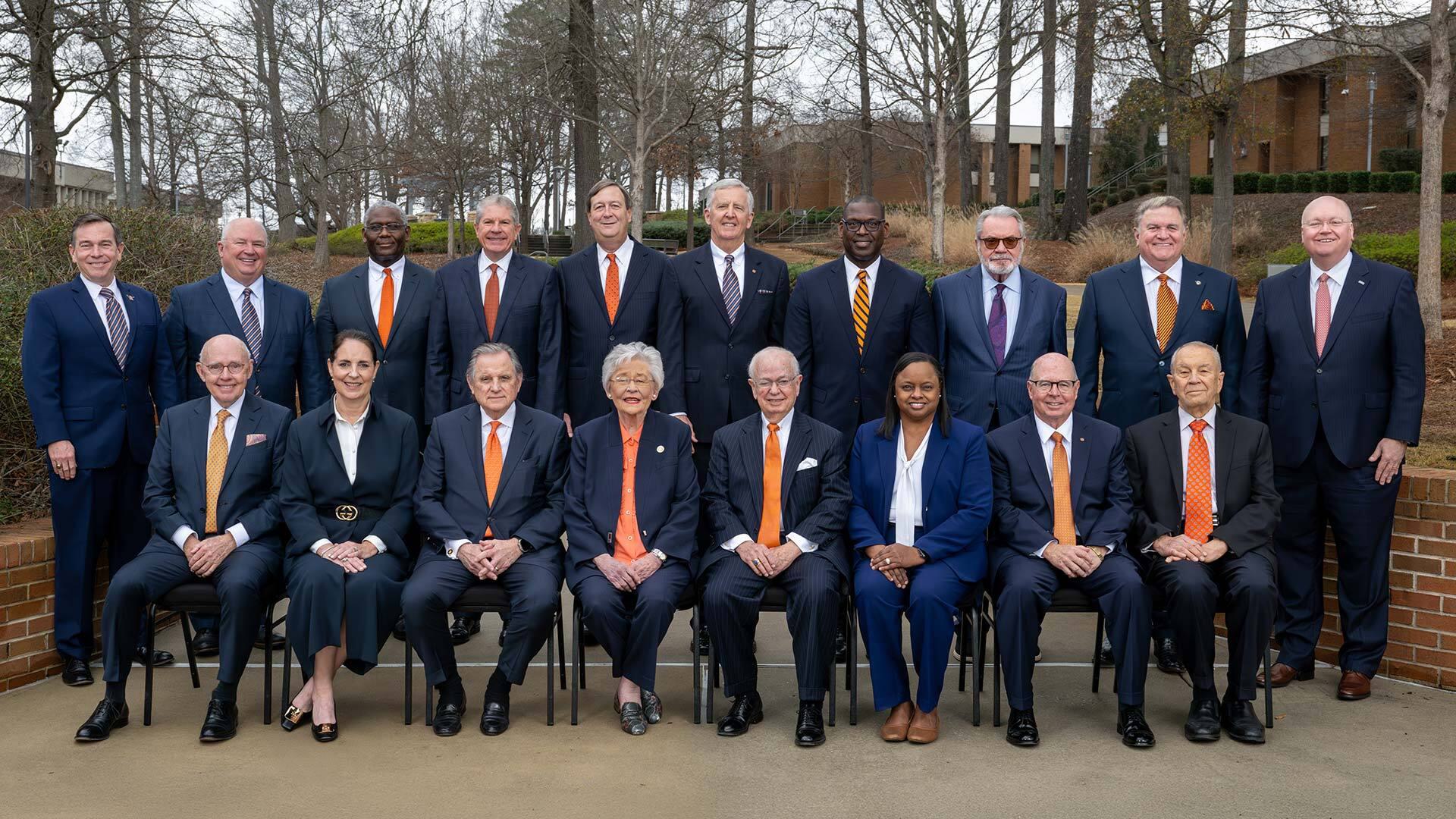
HB 580 explicitly exempted University of Alabama and Auburn from its provisions, since their governing structures are written into the state constitution. Auburn's Board of Trustees nonetheless raced to comply independently. On June 5, the Auburn Board gave itself control over course offerings, curriculum, degree requirements, and academic credentials while eliminating shared governance at the institution. The two policies were passed unanimously and without discussion. The existing University Senate was disbanded. In its place, the board voted to create a new body called the Presidential Academic Advisory Council, which will advise on curriculum and faculty tenure among other matters the president and provost may request.
Despite Auburn's constitutional protections from legislative imposition, it was made abundantly clear that compliance was nonetheless expected. With state funding on the line, this was a threat the Auburn Board took seriously (or used as a justification for moving in a direction to which they were already favorably inclined). It remains to be seen whether the flagship will follow suit, but it is clear that constitutional protections become all but meaningless in this environment.
South Carolina
The state budget (H. 5126) was last amended on May 6, 2026 and is currently in conference committee. It has become increasingly common to intervene in state higher education through budget processes, as is the case here, in part because budgets are massive and complex documents which are harder for interested parties and the press to digest. The provisions of the House version, as discussed in April, include prioritizing STEM programs and making it easier to shut down lower enrollment programs not serving those priorities.
The Senate version stripped the STEM-only investment requirement and the "lost money for four consecutive years" admissions-suspension trigger. The House responded by reinserting their language, which in turn was not accepted by the Senate leading to the conference. The budget must be enacted before July 1, so we will know shortly whether the House prevails in its desire to shift funding priorities to career-focused STEM programs.
New Clouds
Oklahoma
By executive order, Oklahoma's public regional universities and community colleges are barred from granting new tenure appointments; future faculty will be hired on fixed-term contracts renewable based on performance, student outcomes, and "alignment with workforce and Oklahoma economic needs." Research universities including OU and OSU are exempt from the tenure ban, though their tenure policies remain under scrutiny. This executive order was followed by legislative efforts to go further: Senate Bill 1782 passed the Senate Education Committee and would extend the tenure restrictions to OU, prohibiting any public college from granting tenure to new hires after January 1, 2027 and capping all faculty contracts at five years. The bill's last action was on March 5, 2026. It appears to have stalled, which means the executive order stands while the more aggressive legislative push remains in legislative limbo for now.
Kentucky
Kentucky Republicans overrode Democratic governor Andy Beshear's veto to pass House Bill 490, which allows public college and university boards to lay off even tenured faculty for "bona fide financial reasons," including low enrollment in a major or "misalignment of revenue and costs." It requires at least 30 days' notice to the affected professor, giving them only a month to defend their job to board members. Beshear's veto message argued the bill would limit the state's ability to hire the best people and threatens academic freedom. In [a joint statement](AAUP and AFT ), the AAUP and AFT warned that the language could be invoked to shut down research programs whose findings conflict with board members' financial interests, or to eliminate departments that have become ideological targets. It is certainly true that "misalignment of revenue and costs" is economic-sounding language that can provide cover for a wide range of motives.
Tennessee
Governor Bill Lee signed House Bill 2194, which prohibits faculty input and recommendations from being considered when deciding whether to suspend or fire faculty based on "misconduct" allegations. As the law puts it, "a tenured or non-tenured faculty member is only entitled to a written notice of the grounds for termination or suspension and an opportunity to be heard by the institution's chief academic officer or chief executive officer." All terminations and suspensions based on misconduct must be made by the chief executive or academic officer "without any recommendation or vote by another faculty member." The vital role of faculty peers in due process in misconduct investigations is eliminated by statute, and with it one of the foundational procedures distinguishing academic employment from at-will employment.
Indiana
Governor Mike Braun signed Senate Bill 199 into law, which could end academic programs at the state's public universities that fail a new federal graduate earnings test—the federal "Do No Harm" test, which requires programs to show their graduates earn more on average than high school diploma earners. Indiana's law goes further, ordering programs that fail the test to close unless the state Commission for Higher Education (made up entirely of gubernatorial appointees) exempts them. While Indiana's SB 199 uses different mechanisms from what the South Carolina House wrote into the state budget bill, the goal is the same: attrition of programs that don't produce immediate wage returns.
Federal Storms
Accreditation
After four days of discussions, an advisory committee reached consensus on the Trump administration's proposed overhaul of accreditation. Assuming the Education Department issues the final accreditation rule by November 1, the overhaul will take effect July 1, 2027. The AIM (Accreditation, Innovation, and Modernization) committee process, rooted in an executive order Trump signed April 23, 2025 titled "Reforming Accreditation to Strengthen Higher Education," would, among other things, strip accreditors of the ability to impose diversity-related requirements on institutions and make it easier for new accreditors to gain federal recognition. Since accreditation is the gateway to Title IV funding—Pell Grants, federal student loans—this is a potentially powerful lever for federal control unlike anything the administration has been able to accomplish thus far.
Federal Grants
The Office of Management and Budget published proposed rules that would give administration officials direct power to impose ideological litmus tests over billions of dollars in federal grants, setting up a process requiring senior political appointees to pre-approve grants for "alignment with the president's priorities." The regulations seek to codify that Trump officials have the right to continue canceling thousands of grants that they say don't align with the president's priorities, and to reject new ones along the same lines. The OMB regulatory package is set to take effect October 1, 2026 (comments are due July 13, 2026). These new rules replace earlier efforts on the part of the administration to cap indirect research cost reimbursement rates at 15%, efforts that were blocked by the courts. And like the accreditation changes, this will allow for much more direct ideological control over higher education, public and private.
Subscribe (always free)
Subscribe (free!) to receive the latest updates




Member discussion